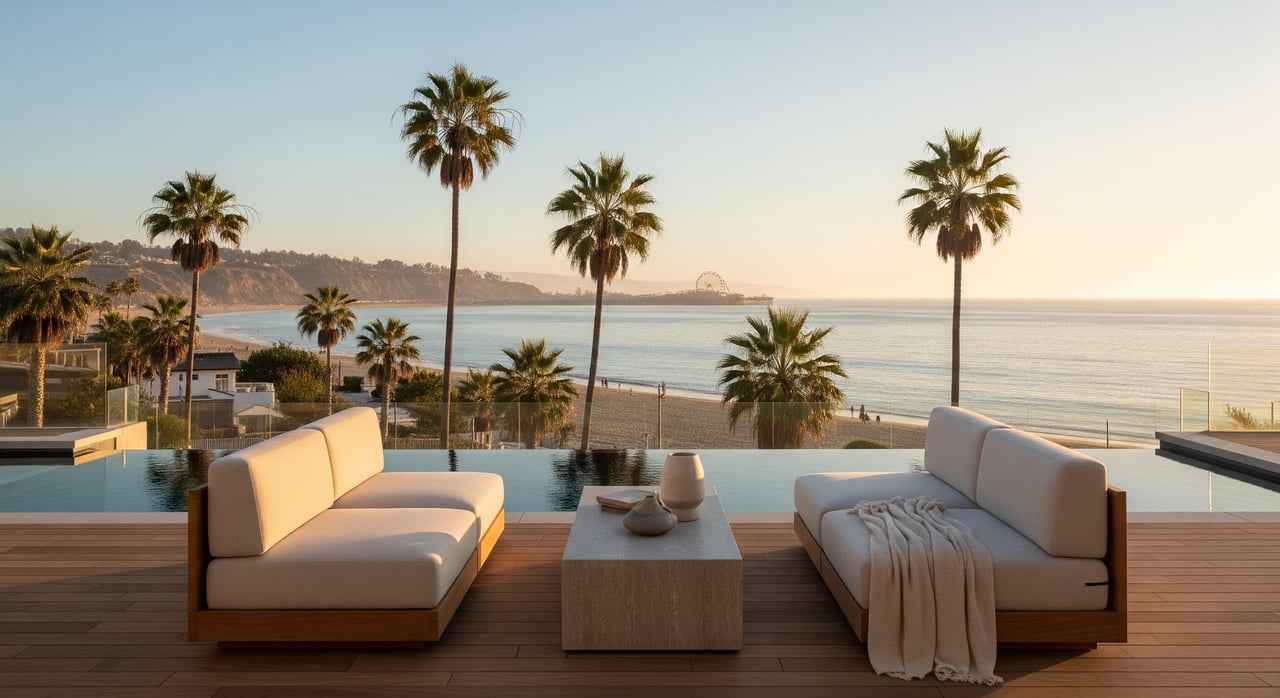
Craving ocean air and sunset walks right outside your door? Living near the beach in Santa Monica feels as effortless as it looks, but the day‑to‑day details matter. From a cool marine layer to permit parking and weekend crowds, small choices about where you live can change your routine. In this guide, you will learn how the microclimate works, what to expect with parking and noise, and which neighborhoods fit different lifestyles. Let’s dive in.
Neighborhoods near the sand
Santa Monica is a compact coastal city of about 93,000 residents, so “near the beach” usually means within a few blocks to roughly a mile of the shoreline. The beachfront corridor centers on the Pier and runs north along Ocean Avenue and south toward Venice. Housing close to the sand skews toward condos and apartments, with single‑family pockets set a few blocks inland.
Downtown, Third Street, Ocean Avenue
If you love to walk everywhere, this is your zone. You get immediate access to the Promenade, the Pier, and the beach path. Expect the highest foot traffic, frequent events, and evening activity. Most buildings here are condos or apartments, often with amenities and higher HOA dues.
North of Montana
Tree‑lined and residential, this area offers a calmer feel with larger single‑family homes set back from the beach. You are still close enough for daily beach time, but you trade some bustle for quiet streets. Inventory is limited and pricing is among the city’s highest.
Ocean Park and Sunset Park
South of downtown toward Venice, these areas feel more eclectic with a mix of housing styles. You are close to the bike path and local restaurants. Street‑to‑street differences in noise and parking are common, so block‑level touring helps.
Pico and Mid‑City
Further from the sand but still bikeable, these pockets can offer more varied price points. You will drive a bit more for the beach and main attractions. In exchange, you may find a wider range of home types and building styles.
Climate you will feel
Santa Monica’s coastal climate is mild year‑round. Summer days near the water often top out in the upper 60s to mid‑70s °F, and winters generally bring daytime highs in the 50s to 60s °F. Rain concentrates in winter, with modest annual totals by Southern California standards.
A regular feature is the marine layer, often called “June Gloom.” Late spring and early summer mornings can be cool and cloudy, then clear in the afternoon. If you plan morning runs or beach time, you will feel that pattern.
You will also notice a temperature gradient. Live 1 to 3 miles inland and afternoons are often several degrees warmer. Onshore breezes cool the coast most afternoons, while occasional Santa Ana wind events can bring heat and drier air. The salty, moist marine environment also means more frequent exterior upkeep. Plan for faster wear on metalwork, paint, and outdoor gear.
Parking, traffic, and noise
Near the beach, parking is a real quality‑of‑life factor. Many blocks use time limits or Resident Parking Permits, and meters and city lots fill quickly on weekends and holidays. If you own a car, an assigned garage or dedicated space is a major convenience.
Traffic flows on Pacific Coast Highway, Lincoln Boulevard, and the I‑10. Expect congestion during commute peaks and seasonal spikes on sunny weekends and event days. Plan errands and arrivals with that in mind.
Noise varies by block. The Pier, Promenade, and Ocean Avenue have lively daytime and evening activity. You may hear amusement rides, live performers, and event crowds within several blocks. Further inland, especially on tree‑lined residential streets, the soundscape quiets. Aircraft from Santa Monica Airport can be audible in some eastern neighborhoods, and routine city sounds like lifeguard horns and sirens pop up near the coast.
Walkability, bikes, and transit
Walkability is a highlight. Downtown and the beachfront corridor make it easy to run errands, grab coffee, and get to the sand on foot. If you prefer two wheels, the Marvin Braude Bike Trail, known as “the Strand,” gives you a scenic, car‑free ride along the coast.
Santa Monica’s Big Blue Bus connects local neighborhoods and nearby Westside destinations. The Metro E Line light rail links downtown Santa Monica to central Los Angeles, which helps if you want to avoid driving for some commutes. Many residents still use cars for groceries, school runs, and cross‑town trips, so plan for a mixed‑mode routine.
Homes, costs, and upkeep
Proximity to the sand, ocean views, and immediate beach access carry a premium. Along Ocean Avenue and the beachfront, condos and smaller multifamily buildings are common. A few blocks inland, you see more single‑family homes, with the largest and most expensive properties concentrated in areas like North of Montana.
Budget for elevated ongoing costs. Beachfront exposure typically means higher maintenance frequency for paint, metal, and building systems. Condo buildings near the coast often have higher HOA dues to cover exterior work, insurance, and shared amenities. Daily living costs can also trend above the broader Los Angeles average in popular coastal corridors.
Insurance and coastal hazards
Some properties near the shoreline may fall within mapped flood zones, and local sea‑level rise studies identify low‑lying areas and public beach infrastructure as vulnerable over longer timeframes. Lenders may require flood insurance in designated areas. The city and state agencies plan for adaptation through shoreline management and related projects.
Permitting and building rules in the Coastal Zone influence remodels and rebuilds, including height limits, view protections, and design review. Insurance availability and premiums can vary in coastal settings. It pays to review address‑specific flood maps, current insurance quotes, and permitting timelines during due diligence.
Which pocket fits you
Think about your daily routine and tradeoffs. Start with a few simple filters:
- You want to walk to the Promenade, Pier, and the beach every day, and you do not mind crowds: focus on Downtown and Ocean Avenue.
- You value calm streets and larger homes with quick beach access: look a few blocks inland, including North of Montana and select side streets citywide.
- You prefer eclectic charm and easy access to the bike path and local spots: consider Ocean Park and Sunset Park.
- You want proximity without the busiest tourist blocks and more varied inventory: explore Pico and Mid‑City.
Each area changes block by block in noise level, parking ease, and sunlight exposure. Touring at different times of day will tell you the most.
The bottom line
Living near the beach in Santa Monica delivers daily outdoor time, walkable amenities, and a relaxed coastal rhythm. In exchange, you navigate permit parking, seasonal crowds, higher maintenance, and coastal insurance considerations. If you align the neighborhood and block with your routine, the lifestyle rewards are real.
Ready to find your best‑fit pocket near the sand? Reach out to Kati Cattaneo for tailored guidance, private tours, and local insight from a trusted Westside specialist.
FAQs
Beach premium in Santa Monica pricing
- Immediate beachfront and ocean‑view homes typically sell for a significant premium over inland properties, with exact numbers varying by unit size, view, amenities, and market conditions.
Noise near the Pier and Promenade
- Expect noticeable daytime and evening noise within several blocks of the Pier and Third Street; sound levels drop as you move inland onto quieter residential streets.
On‑street parking near the beach
- Street parking is limited and time‑restricted in many coastal blocks; having an assigned space or garage greatly improves daily convenience.
Flood risk and sea‑level planning in Santa Monica
- While widespread, frequent flooding is not typical today, some low‑lying areas are identified as vulnerable over longer horizons; review FEMA maps, local plans, and consider flood insurance as needed.
Maintenance and insurance for coastal homes
- Salt air and moisture accelerate wear on exteriors and metal; plan for more frequent upkeep and confirm current home and flood insurance availability and premiums during due diligence.
Car‑free commuting from Santa Monica
- The Metro E Line links downtown Santa Monica to central Los Angeles, and local buses add coverage; many residents still combine transit with driving for daily errands.